 Hakolkal
Project
Stack Playground (Physics Toy)
Creator & Solo Developer
Live DemoMy tech stack turned into a physics toy: every skill is a brick you can grab, throw, stack into a Jenga-style tower and blow up, under Earth, Moon or zero gravity. Built with React Three Fiber and pmndrs' react-three-rapier, which runs the Rapier physics engine in WebAssembly. It renders on demand and lets bodies sleep, so an idle scene costs almost nothing, and it works with touch on mobile.
Stack
- React
- TypeScript
- Three.js
- React Three Fiber
- react-three-rapier
- Rapier
- Vite
See it
Want something like this?
Tell me what you are building, or what you are still doing by hand, and I will tell you how I would approach it. No commitment.
More projects
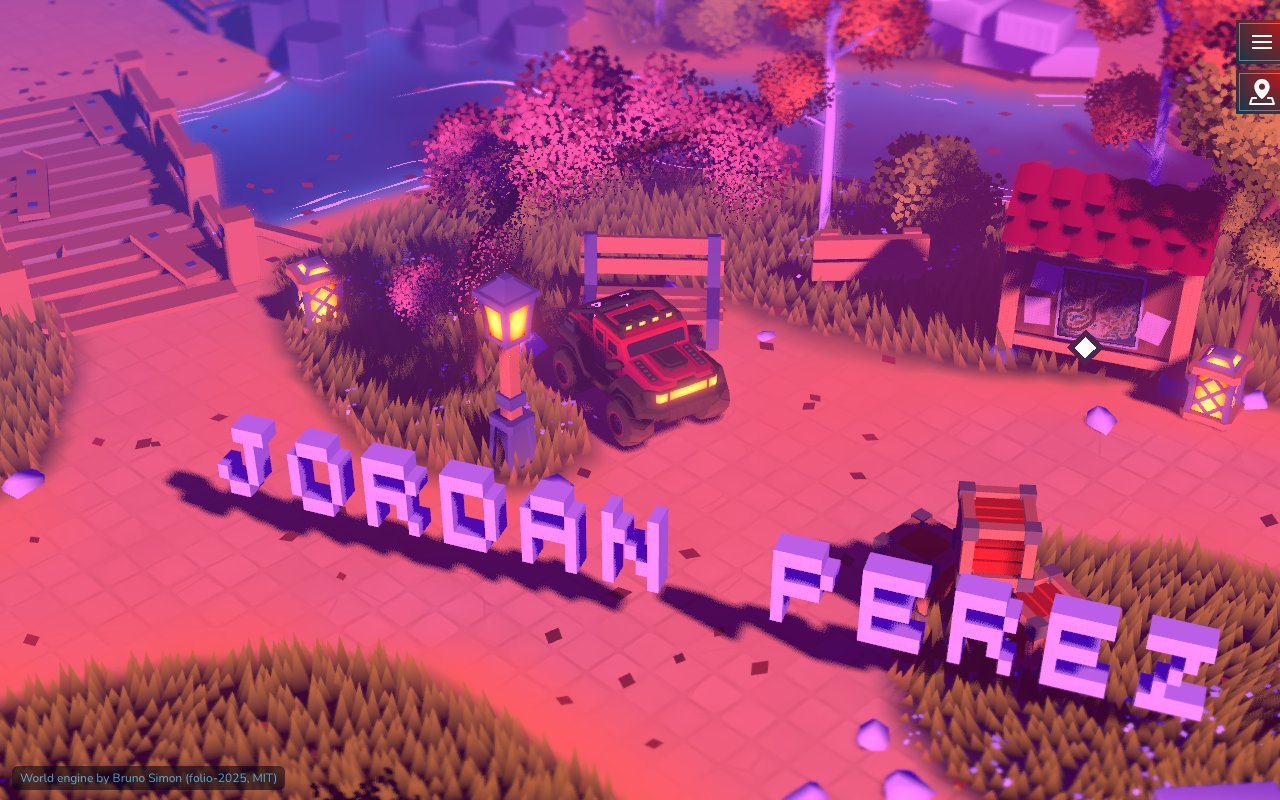 JP World (Drivable 3D Portfolio)My drivable portfolio: a small 3D island you explore by car to find my projects, my career timeline and my links. The world engine, physics, art and music come from Bruno Simon's open-source folio-2025 (MIT), which I forked and rebranded: I swapped in my own content, rebuilt the landing letters as physical voxel blocks that still react to the car, removed every feature that needed his server, and shipped it as a static site on GitHub Pages through a CI workflow. Runs on WebGPU with three.js TSL and Rapier physics.
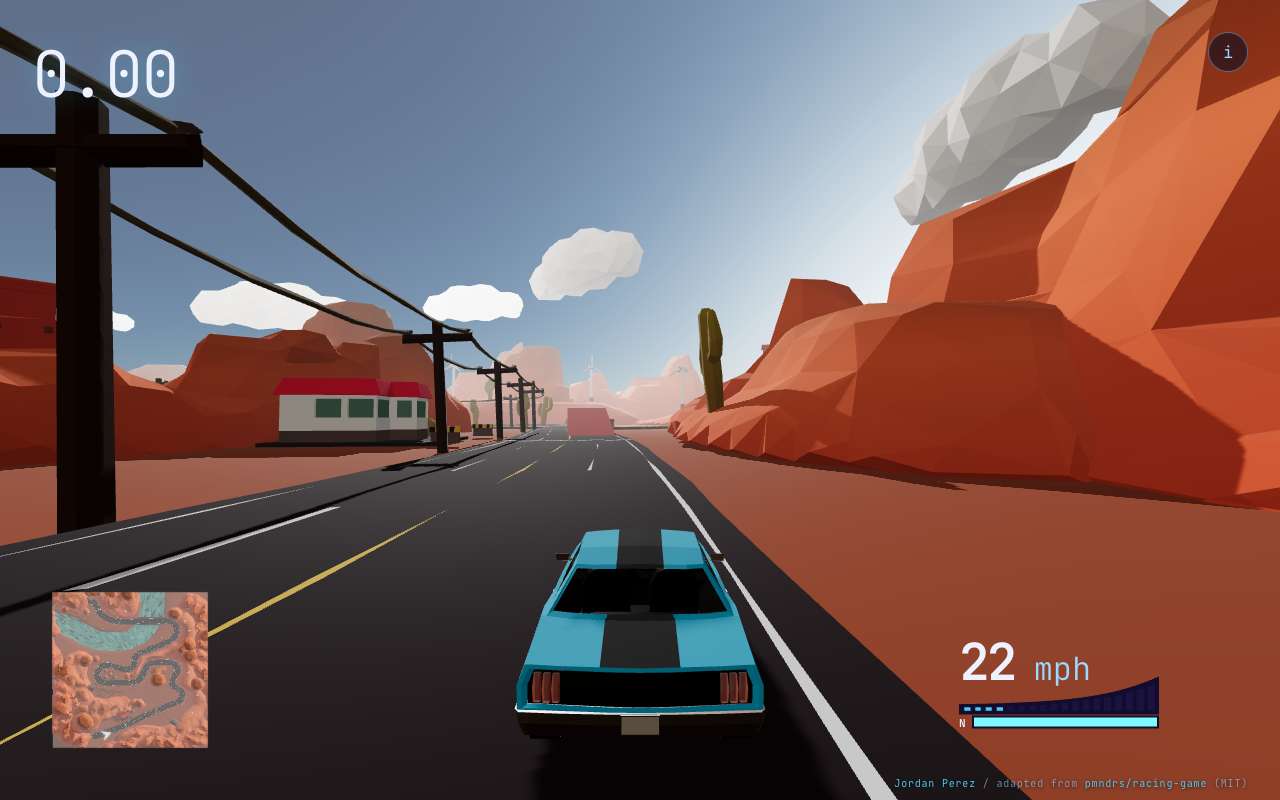 JP Racing (Browser Racing Game)I adapted pmndrs/racing-game, an open-source React Three Fiber driving game, and moved it from its 2023 stack onto React 19, R3F 9 and three.js r187, fixing the rendering and particle bugs the newer three.js introduced. I rebranded it as JP Racing with my own start screen and HUD, replaced its hosted leaderboard (which shipped a public key in the source) with a local best-lap board, and added touch controls so it plays on phones. Deployed to GitHub Pages through GitHub Actions, steady 60 fps in my tests.
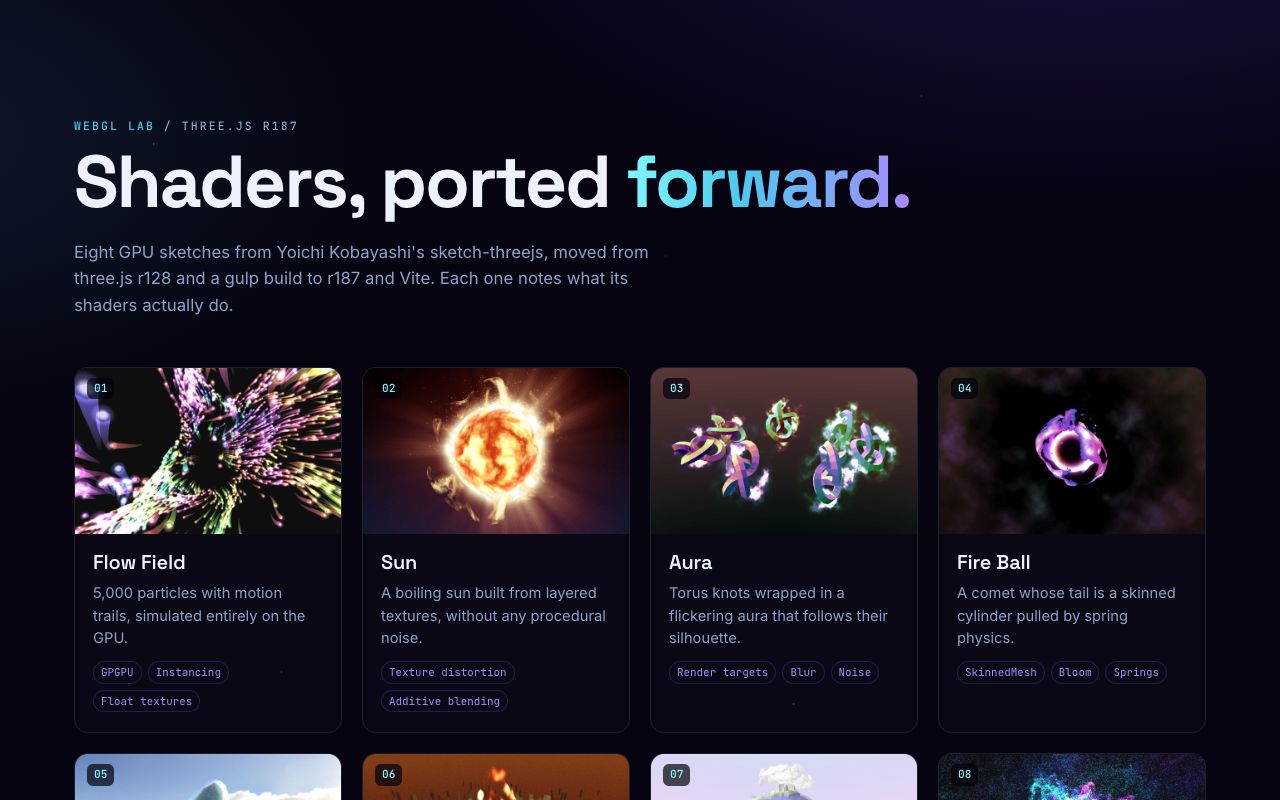 WebGL Lab (Shader Gallery)Eight of Yoichi Kobayashi's shader sketches from ykob/sketch-threejs (MIT), ported from three.js r128 and a gulp build to three.js r187 and Vite: GPU flow fields, a refracting glass, a noise-driven flame, a spring-skinned fire ball and more. I fixed every API the upgrade broke, from WebGL2 shader compilation to skinning and float textures, and redesigned it as a gallery where each sketch explains, from its own code, what its shaders do. The original effects are his; the port, the curation, the write-ups and the interface are mine.
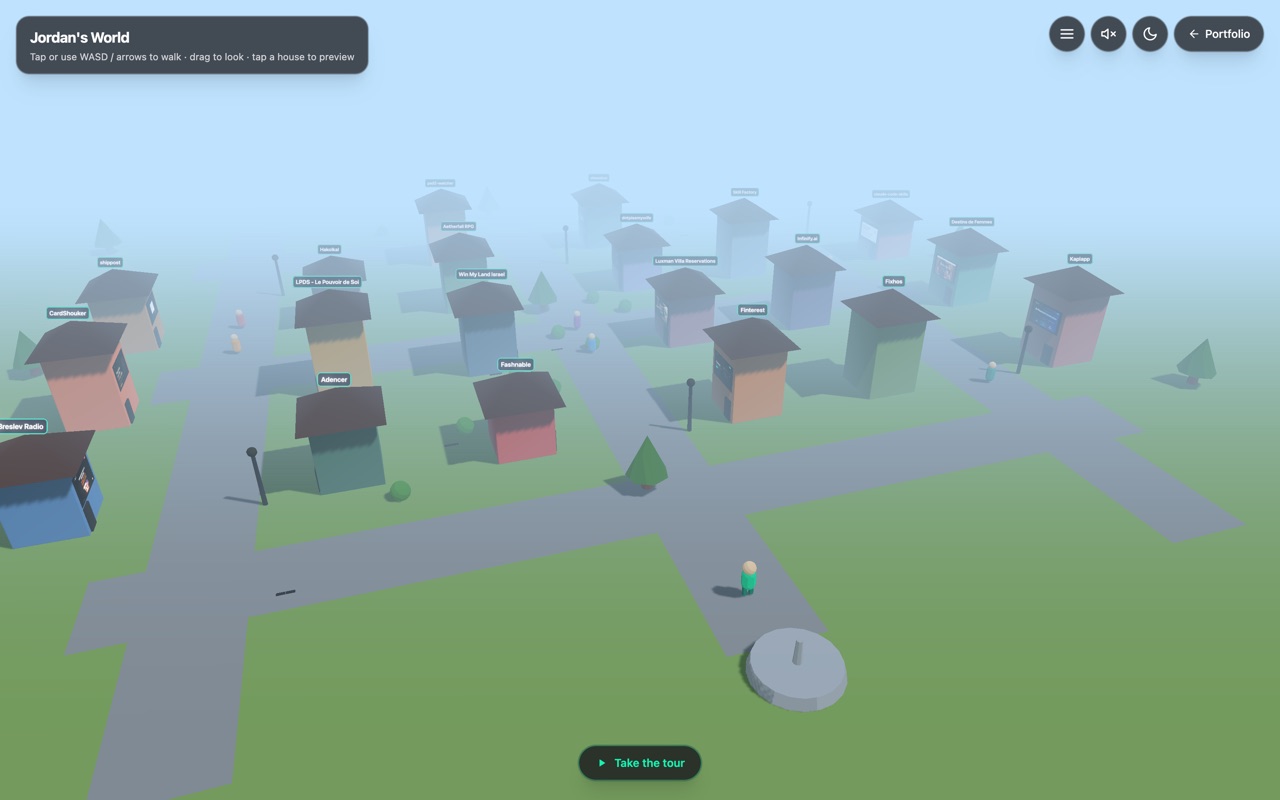 Jordan's World (3D Verse)An explorable 3D town where every house is a project: walk it with WASD, drag to look, day/night cycle, fog and bloom, and an intro flythrough. Each storefront wears a project's screenshot — tap a house to open its preview. Built from scratch on three.js with a single WebGL scene, screenshot-faced geometry, lightweight 512px storefront textures, and a guided tour mode.
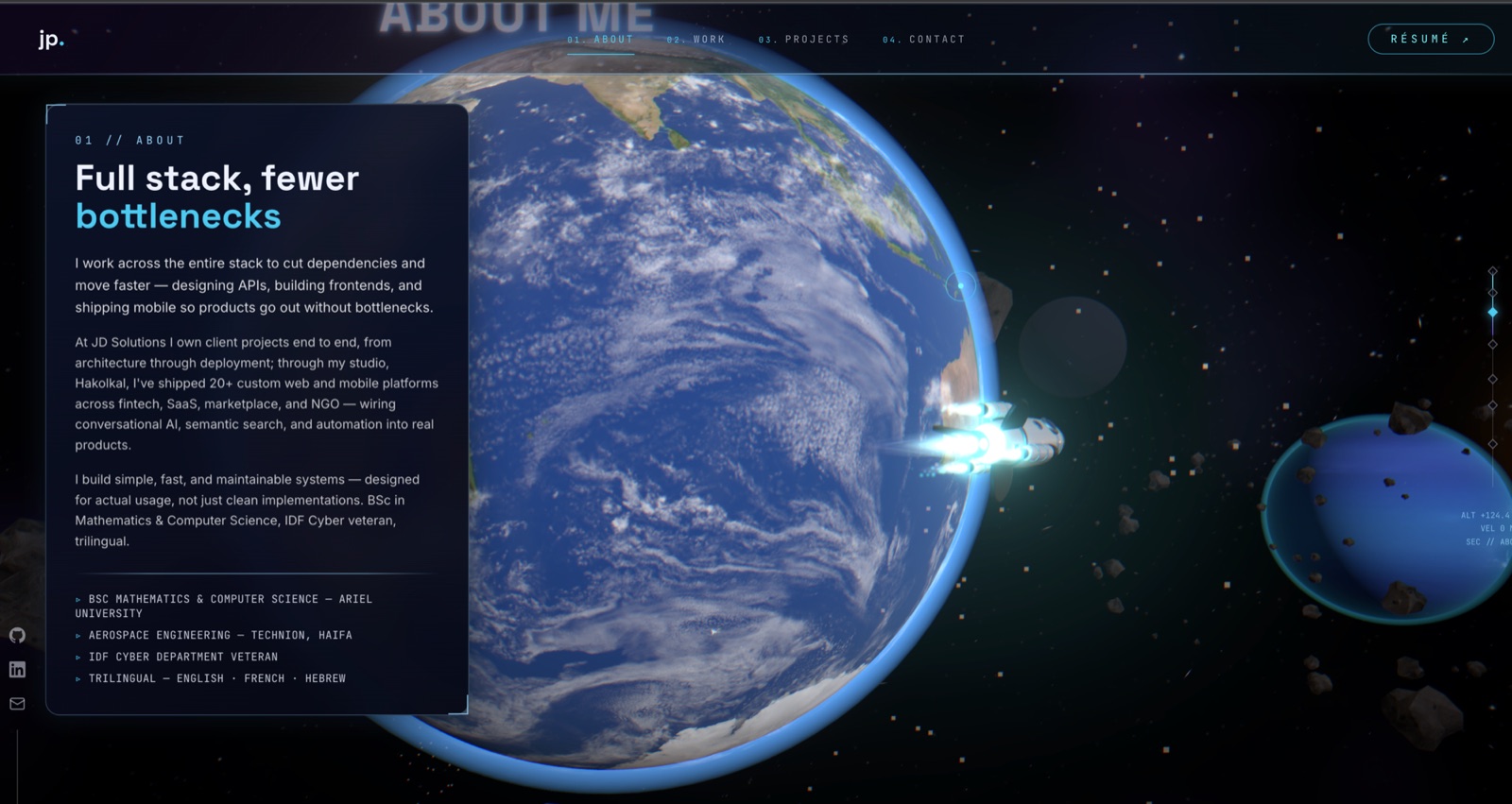 Jordan in Space (Scroll-Flight Portfolio)A portfolio you don't read — you fly through it. Scroll and a rocket launches from Earth, threads past the planets, orbits a ring of my projects, and kamikazes into the sun. Real NASA + Solar System Scope textures, a procedural nebula and HUD, and a full scroll-driven camera rig at 60fps in the browser. Built from scratch on React Three Fiber + Next.js, adapted from an open-source concept into my own space.
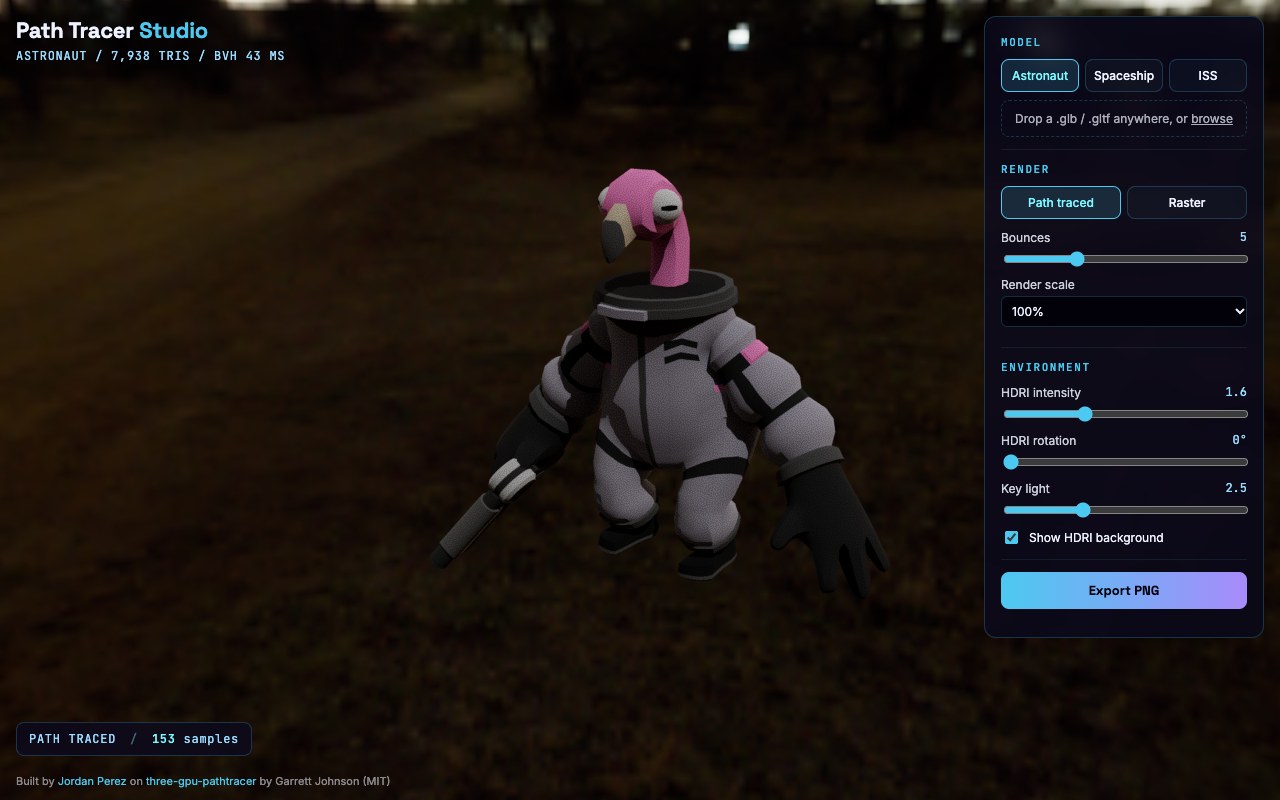 Path Tracer StudioA browser app that path-traces glTF models progressively on the GPU, built on Garrett Johnson's three-gpu-pathtracer library. Pick a sample model or drop your own .glb, light it with an HDRI and a key light, orbit around it, and export the converged render as a PNG. I wrote the step that prepares each model first, decoding Draco, expanding quantized vertices and unpacking instanced parts, so real-world files like NASA's ISS model trace correctly, plus a render-scale option and texture budget for weaker GPUs.
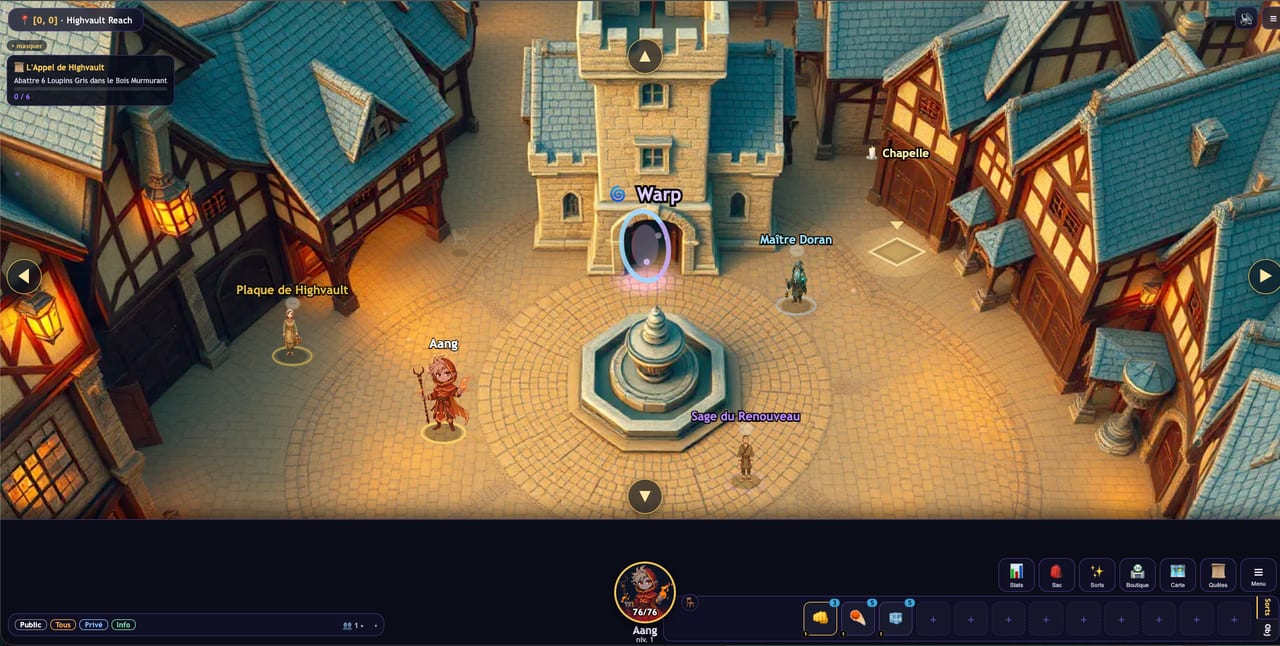 Kalora RPGBrowser-based tactical MMORPG inspired by Dofus, written in vanilla JavaScript with no framework and no build step: about 10,000 lines across one large HTML page and 15 modules for the world map, combat, character rendering and rewards. An isometric town and turn-based grid combat render on an HTML5 canvas, with real-time co-op and duels over WebRTC (PeerJS), where guests replay the host's monster movement step by step from synced waypoints. Firebase handles accounts, persistence and live presence, and Cloud Functions are the authority for what matters: the player marketplace, a gold ledger, HMAC-signed item provenance, and fight and dungeon rewards, which the server recomputes from a replay of the combat so a client cannot dupe items or mint gold. Twelve animated character bodies (six classes, two genders) with authored front, rear and three-quarter views, per-spell leveling, dungeons and a full bestiary, loot tables with item sets (panoplies), shops and a bank, NPC dialogue and quests, co-op group XP, social chat with emotes, and an installable mobile-friendly PWA.
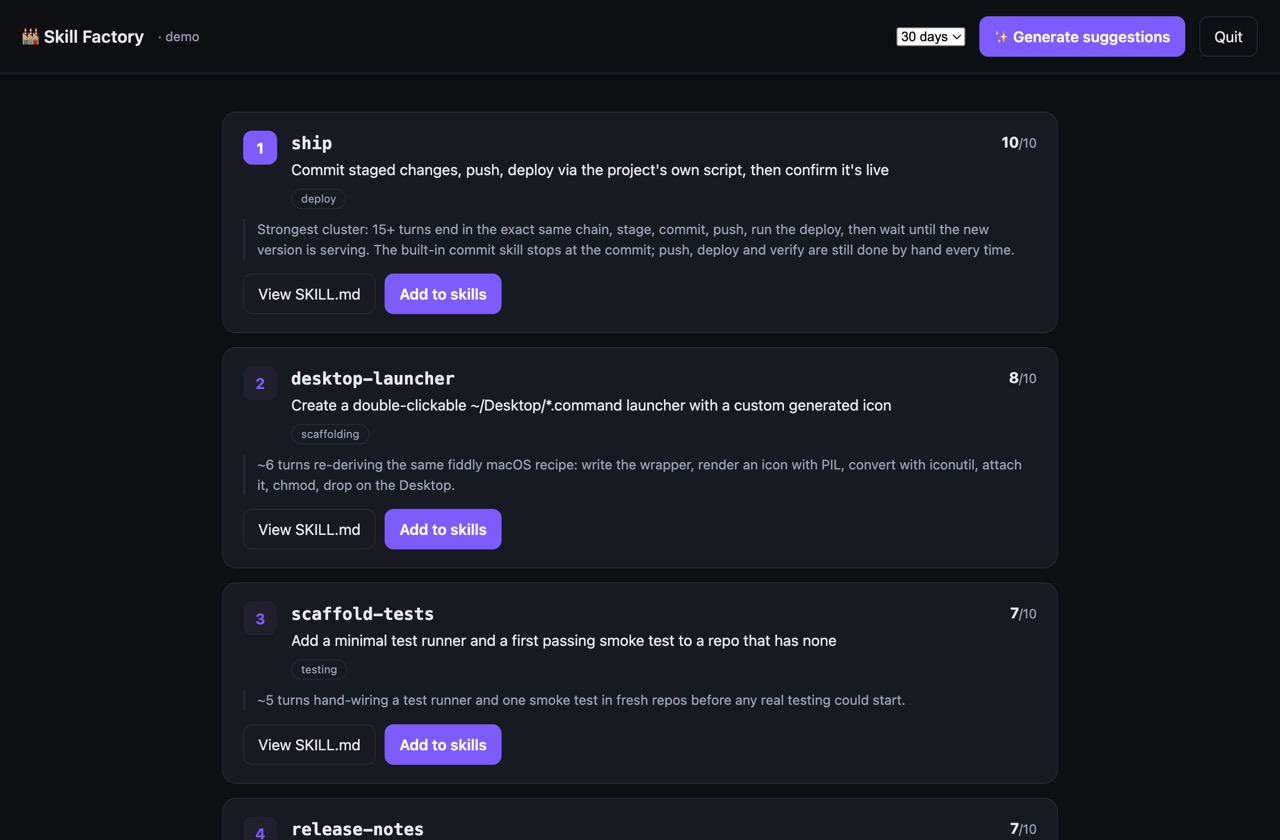 Skill FactoryOpen-source Claude Code tool that studies how you actually work and writes new skills for you. A read-only scanner streams your own Claude Code session transcripts and skill-usage log, isolates the multi-step tasks you still do by hand (the ones no skill has automated yet), and distills hundreds of megabytes of history into a compact digest. One Claude pass then clusters them, ranks the top 5 by how often they recur and how much manual effort they save, and drafts a complete, ready-to-install SKILL.md for each. Runs entirely on your own Claude subscription via Claude Code, reads your transcripts read-only, and never writes a skill without showing a diff and asking first. Ships with a local web UI — Generate, review 5 ranked cards, one-click install — plus a CLI and a double-clickable macOS launcher.